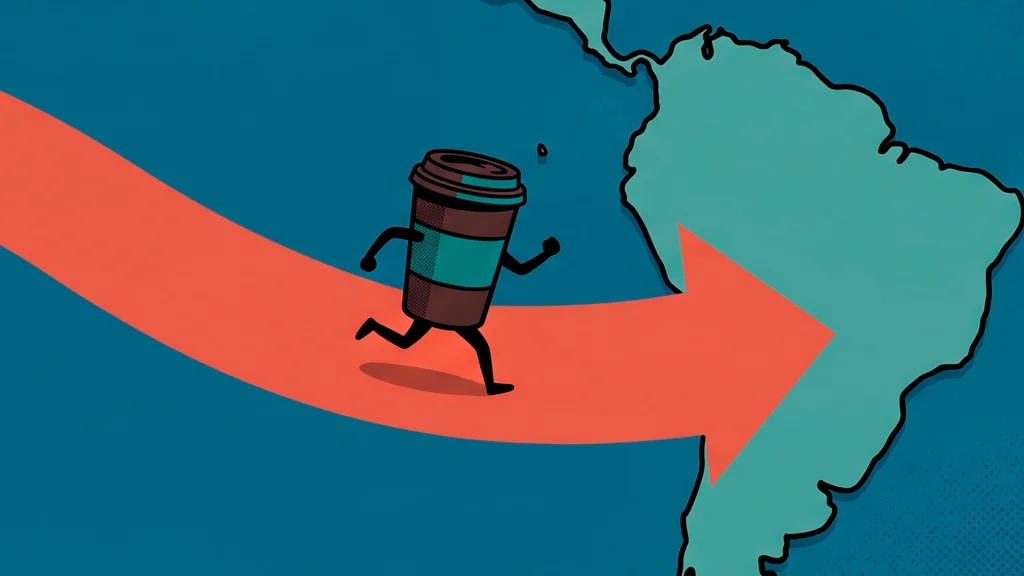
- Olive oil prices in parts of Europe increased by 130% from 2022 to 2024
- Coffee and cacao have also hit multi-decade highs in recent years – yet consumption has largely stabilised as shoppers adjust
- Crisis headlines turn staples into talking points, reinforcing ritual and value as much as they spark outrage
FOR much of the past three years, commodities have been making headlines: coffee prices “soaring,” cacao facing “structural collapse,” and olive oil becoming “liquid gold.”
Each spike is framed as a crisis, with supermarket shelves turning into case studies in inflation, affordability and consumer psychology. While shoppers grumble, they eventually adjust budgets and ultimately keep buying.
Is this simply how commodity markets behave under stress? Or do crisis narratives themselves help sustain demand, keeping everyday staples culturally relevant and economically resilient?
Recent commodity headlines have followed a “crisis” theme. Coffee futures surged to multi-decade highs amid climate shocks in Brazil and Vietnam. Cacao prices smashed records after disease and weather ravaged West African harvests. Olive oil prices in parts of Europe increased by 130% following droughts across Spain and Italy. Throughout these phenomena, media coverage focused on the shock factor. “Liquid gold: an olive oil shortage,” “no one wants to pay $25 for breakfast,” or even “cocoa prices continue to rise – when might the tide turn?” were just some examples.
And yet consumption has proved stubbornly resilient. Coffee volumes dipped briefly, but then stabilised – and chocolate makers shrank bar sizes rather than abandon shelves. Olive oil – once a £3 staple in Britain – now sells for £8–£10 a litre, and still moves. 2024 saw a surge of olive oil price crisis headlines – and while consumers complained, they seem to have adapted. Some trade down, others buy less often, but few quit entirely.
This pattern suggests that demand for certain commodities is less price-sensitive than assumed – especially when products are habitual, culturally embedded or framed as essentials. Beyond caffeine, coffee is ritual. Chocolate is comfort, and olive oil is health and heritage. Price shocks may sting, but they rarely break the relationship.
The intensity of media coverage plays a role. Crisis framing keeps commodities salient.
“I can’t say for sure that media coverage directly drives prices, but I find the tone and narrow framing concerning,” says Karl Wienhold, PhD Candidate in Development Studies at the Universidade de Lisboa.
“Data from the Specialty Coffee Retail Price Index, which tracks US retail prices for roasted coffee, shows that price rises have gone well beyond what higher green coffee costs would justify – even exceeding the cost increases once projected under tariffs that were later dropped. Yet much of the coverage seems to accept these hikes at face value, rarely questioning whether increases of this scale were actually necessary.”
Prices rising without coverage may see consumers drift – but if they become talking points, the mechanism of scarcity as a value signal kicks in. This reassures producers and retailers that the product matters enough to argue over. In a crowded consumer economy, relevance is half the battle.
Scarcity sells: a historical habit
This is not new. Commodity markets have long oscillated between glut and panic, often amplified by narrative. In the 1970s oil shocks, headlines of queues and embargoes entrenched petroleum’s geopolitical centrality for decades. Wine scares – from phylloxera in the 19th century to frost-driven shortages in Burgundy – regularly elevated prestige and prices, even as global supply expanded elsewhere.
Coffee offers a textbook case. Since the collapse of the International Coffee Agreement in 1989, prices have been volatile, swinging between prolonged lows and sharp spikes. Frosts in Brazil in 1994, disease outbreaks like coffee leaf rust in the mid-2000s, and recent climate disruptions have each triggered alarmist coverage. Yet global consumption has climbed steadily over the long run – or plateaued at worst.
Scholars such as Stefano Ponte have shown how narratives of crisis interact with value chains. Scarcity does not automatically translate into higher incomes for producers; much depends on who controls trading, branding and timing. Speculation can magnify swings, while downstream actors often absorb shocks through price smoothing, shrinkflation or marketing.
“I’ve been looking at coffee futures and price movements for years, using econometric analysis, and one thing is clear: you can’t pin any single price move on one cause,” says Karl. “That said, when you compare prices over time with different variables, a strong link shows up between prices and speculative trading volume.”
“Speculation typically runs at around five times the volume of physical coffee traded globally. When financial trading so heavily outweighs the real market, large price swings can happen without much reference to actual supply and demand.”
“What’s striking is how easily these moves are justified after the fact. Scroll through LinkedIn and you’ll find neat explanations built around weather, regulation, tariffs or policy – all retrofitted to match the price direction. But over the past couple of years, whether you look at EUDR, weather in Brazil and Vietnam, or trade measures, the underlying global supply–demand balance simply hasn’t supported the scale of the price moves we’ve seen.”
Luxury markets have refined the logic of scarcity, which – real or managed – is central to desirability. Limited releases, climate-affected harvests and “once-in-a-generation” yields turn constraint into something desirable. Olive oil’s recent ascent mirrors wine’s playbook: drought and price rises become proof of authenticity and desirability.
The media plays a central role in this dynamic. Crises framed as temporary and dramatic invite consumers to “weather the storm” rather than exit the category. And over time, the new price normalises.

Elasticity, manipulation – and the next shock
Where does this leave consumers now? Elasticity and trust have a breaking point – but it is higher, and more uneven, than many assume. Essentials with ritual value tolerate repeated shocks, while discretionary add-ons do not. Households adapt by buying cheaper brands, smaller quantities, or buying on fewer occasions.
“In the short term, this kind of volatility tends to squeeze industries and accelerate consolidation,” says Karl. “Weaker players fall away, while those with scale, capital and protection are better placed to absorb the pressure. Over time, that shifts market share toward the largest companies.”
“We’re already seeing how this plays out in coffee. As prices rise, many consumers trade down to cheaper options, which undercuts narratives around differentiation and sustainability. It also pushes roasters toward more flexible blending, giving large, transnational buyers more leverage to play origins off against each other and bid prices down. The end result is that industry leaders protect – and often grow – their long-term profitability.”
This resilience also creates space for financial dynamics to intrude. Futures markets respond not just to harvest data but to consumer sentiment. Speculation can accelerate spikes, especially when narratives of shortage dominate. Critics invoke the “shock doctrine” – the idea, associated with Naomi Klein, Jeffrey Sachs and others, that crises are moments when structural shifts are pushed through markets under cover of urgency. In commodities, shocks can justify price resets that persist long after supply recovers.
“If futures prices ever climbed so high that they genuinely threatened demand and company profits, I suspect the industry would simply stop using them as a reference,” says Karl.
“We’ve already seen hints of this: even in the past year, some specialty coffee traded at negative differentials because buyers argued market prices were unsustainable. If prices were fully decoupled like this, futures contracts would lose their hedging function altogether. With so little physical delivery anyway, they would become largely speculative instruments – closer to crypto, gold or housing markets than tools for managing real trade.”
Climate volatility continues to increase, along with droughts, floods and disease. Media cycles continue to frame each as “unprecedented,” but it seems that consumers will adapt again – until trust erodes or substitutes finally stick.
Crisis headlines boost commodities – at least in attention. The question is who benefits from the boost – and how long elasticity can be stretched before adaptation turns into abandonment.
Coffee Intelligence
Want to read more articles like this? Sign up for our newsletter here.