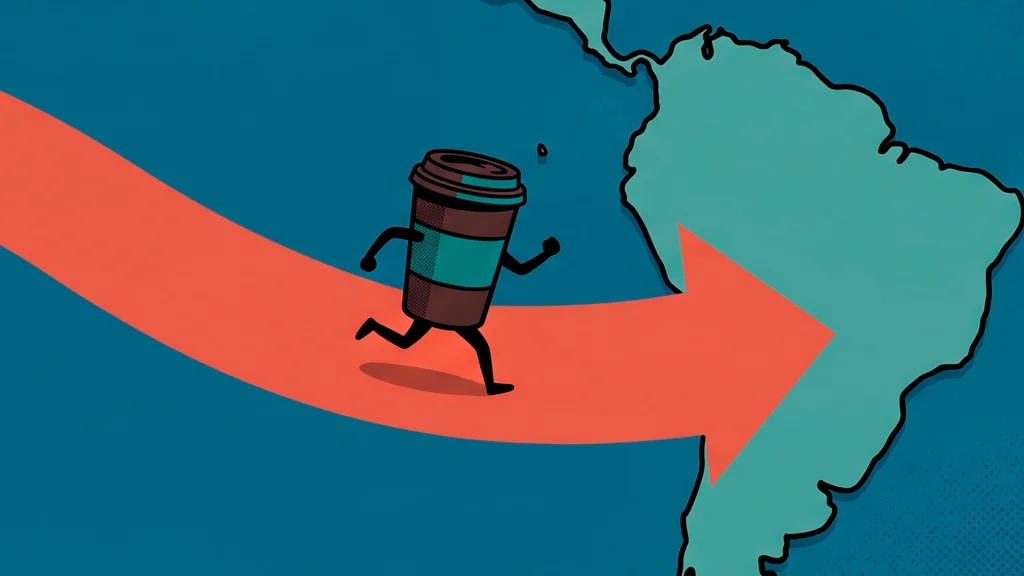
- Most cafés certify baristas, not bosses – yet poor leadership is what sinks businesses
- Passion isn’t a substitute for process – nearly 7 out of 10 U.S. workers said they would quit their jobs over a bad manager
- Meanwhile, structure sells – companies with strong management grow 30% faster
CERTIFICATION is standard for baristas, roasters, and cuppers – all in pursuit of excellence. Yet curiously, one role remains neglected, often left to chance or charisma: management.
Despite being one of the most consequential functions in any coffee business, management remains broadly informal, underdeveloped, and widely undervalued, especially in the specialty coffee industry. In that context, despite its outsized impact on a business’s survival, leadership in coffee trades more on personality than on structure.
Managing people, unlike roasting beans or pulling espresso shots, rarely earns applause. But it is far more predictive of a business’s long-term success. As the specialty coffee industry grows in complexity – from micro-roasteries to vertically integrated exporters – the absence of formal management training and systems is becoming a liability.
“Certification is seen as a badge of status – it’s something you can put on a CV to stand out,” says an anonymous, U.S.-based green coffee trader. “But for leadership, there’s no equivalent.”
“I’ve worked for people in leadership positions with no prior training, who only sought out CEO coaching after launching a business. In contrast to baristas or cuppers, no one expects managers to train first. It’s a systemic issue – people ask why I don’t start my own company, but I don’t have ‘white man money.’ Many leaders are in their positions because they could self-fund, not because they’re qualified.”
This lack of focus has real consequences. Strong management isn’t glamorous, but it’s essential. In 2023, 1,932 UK restaurant businesses entered insolvency, averaging approximately 5.3 closures per day – marking a 45% increase from 2022. Closures are linked, amongst other reasons, to a lack of digitalisation, limited marketing and visibility, and operational inefficiency.
When owners design businesses around themselves – the award‑winning barista, the charismatic founder – scale can end up stalling. It can become a repeated pattern: rapid early growth, internal dysfunction, staff turnover, and slow decline. In 2023, Forbes published an article covering the rapid dysfunction and high executive turnover of what they called “the most-funded coffee startup ever,” where headcount went down nearly 50% in two years, despite every promise of a great, lasting success.
By contrast, organisations that invest in systems and professionalise their operations tend to thrive. They establish clear job roles, document procedures, and develop policies that allow talent to grow – and replace itself. These businesses reduce staff churn – A McKinsey article finds that companies that focus on their people’s performance are 4.2 times more likely to outperform their peers, realising an average 30% higher revenue growth and experiencing attrition five percentage points lower – and survive team transitions.
A roastery that celebrates its lead roaster but fails to build a bench of successors risks becoming a cult of personality rather than a sustainable business.
This reality isn’t unique to coffee. In hospitality, management is a profession. Most restaurant chains separate kitchens from offices. Coffee, however, remains a craft domain: visionaries cook up the concept, but logistics, people, and processes are often left to chance.
Stuck in the fun stage
In Predictable Success, business author Les McKeown maps out the stages of a company’s life – broadly the early struggle, the fun stage, predictable success, and finally, the treadmill of bureaucracy. Coffee, it seems, is stuck somewhere between fun and failure.
The fun stage – marked by passion, spontaneity, and informality – is thrilling. Many independent cafés and roasteries embody it: owners work side-by-side with baristas, roasting profiles are scrawled on whiteboards, and strategy is fluid. But this stage isn’t designed to last. Without intentional management, it soon becomes chaotic. Financial decisions are improvised, staff development is inconsistent and accountability can feel diffuse. What once felt energetic begins to feel erratic.
“Many third wave businesses start as lifestyle brands – ‘we travel, we find the best coffee,’” says Anonymous. “But they struggle when it’s time to act like actual businesses. Often, these founders lack operational skills. When a crisis hits – like price volatility, supply chain issues, or recession – those businesses falter because the leadership never really learned how to lead.”
“I’ve seen so many breakdowns where the people on the ground know what to do, but they need permission from a C-suite that doesn’t understand the business or how to sell coffee. Leadership is bottlenecked by investors or boards who aren’t close to the day-to-day. That lack of communication and operational realism is what kills the business, not a lack of passion.”
Several specialty businesses have learned this the hard way. As they scale, they face crises in operations, culture, and leadership. Internal blame games often follow. Leadership friction often follows: roasters blame buyers, café managers blame HQ, and green buyers blame margins. None wield a managerial framework. The result: shrinking margins and burnout – blame gets pushed down, and credit gets pushed up. Meanwhile, private equity eyes the space, demanding ROI and resilience.
Without a system, businesses flounder as they scale. Visionary founders dominate early stages – but without a trained operations leader or layered process, transition to the next stage flops. Great COOs exist, but they are rarely nurtured or rewarded, and visibility remains with the charismatic founder.
Toxic leadership led to more than $223 billion in turnover costs from 2014 to 2019. Nearly seven out of 10 U.S. workers said they would quit their jobs over a bad manager, according to LinkedIn’s recent workforce survey. Research shows that toxic leadership often arises when a leader prioritises personal agendas over the organisation’s long-term goals. This can lead to reduced productivity, higher absenteeism, and poor employee performance due to dissatisfaction and disengagement. Many organisations also lack the tools to address such dysfunction, resulting in hidden costs like lost output, legal fees, and turnover-related expenses.
The irony is that management is both teachable and measurable. In other industries, “best manager” awards exist alongside “best chef” accolades. In tech, people analytics is a billion-dollar field. But in coffee, metrics like turnover rates, team engagement, and workflow efficiency are seldom tracked.
Until management is treated as a craft – one worthy of investment and status – many businesses will struggle to grow beyond the founder’s reach.
What the industry values – and needs
Certification programmes celebrate craft – barista of the year, roast master, Q‑grader – but awards for effective leadership are rare. As the sector matures, this imbalance threatens sustainability.
Fortunately, some businesses are evolving. Larger companies are hiring operations experts from outside the industry, establishing HR teams, and creating COO roles that are vision-coded. A study by Gallup (2019) found that 70% of the variance in employee engagement levels can be attributed directly to the manager, indicating that leadership plays a pivotal role in how employees perceive their work and organisational commitment.
In the coffee sector, there are specific needs when it comes to better management.
“Invest in people in producing countries,” says Anonymous. “If you want coffee to move efficiently and sustainably, you need people who understand the culture and daily challenges. I’ve worked abroad – even fluent in the language – but it’s never the same as having someone from that place who lives it.”
“Also, build real departments: if you have sales, then hire someone who manages sales, not just sells. Same with marketing, logistics, sourcing. Have structure, have systems. And most importantly, be honest in communication. If something won’t work – say it. That kind of transparency avoids major breakdowns.”
“Finally, put women in leadership roles. I’ve met women running entire exporters and washing stations who are still overlooked for advancement. Many of us feel underutilised – because of gender, race, or access. That’s a waste of deep industry knowledge that could help businesses survive and grow.”
For smaller businesses, budgets are tight. But a little investment can go far: peer mentoring, management workshops, and leadership courses and workplace tools can be effective to build capacity, depending on delivery, environment, and atmosphere. Digital tools, even basic project managers or inventory software, can also double efficiency. Owners and managers who regard (reasonable) delegating as leadership, not weakness, often see improved performance and better team morale.
Policy could help. Creating “best manager” awards, offering certified coaching, or featuring leadership stories in trade media would signal value. Young professionals could see formal leadership as a viable career path, rather than a fallback.
The stakes couldn’t be higher. The coffee landscape faces compounding pressures: climate volatility, inflation, political instability, tariff uncertainties, and evolving consumer preferences. These trends mean resilience – not flair – is now the currency of success.
Future-proofed roasters and cafés are those with systems that eclipse founders. They’re led by capable managers who combine data with empathy, systems with strategy, and can adapt before a crisis hits. They are the businesses with succession plans, safe knowledge transfer, and durable structures – not those built around a single barista or roaster’s mystique.
Coffee Intelligence
Want to read more articles like this? Sign up for our newsletter here.