- Amid tariff tensions, Chinese consumers are rallying behind homegrown brands
- Luckin Coffee has rocketed past 22,000 stores, overtaking Starbucks
- As China climbs to 2nd in global soft power, U.S. coffee giants are scrambling to localise
AS the U.S.-China trade tensions escalate, China’s coffee industry is undergoing a significant transformation, marked by the rapid rise of domestic brands and shifting consumer preferences.
Chinese consumers are increasingly gravitating towards homegrown coffee brands, driven by a surge in national pride and a desire to support local enterprises.
“Ironically, China’s strategic handling of tariff disputes has helped strengthen its global image, positioning it as both technologically resilient and culturally confident,” says MJ Wang, a former coffee shop owner in Shanghai.
“This growing confidence in its own soft power has also encouraged greater openness within China’s market. Many foreign-funded enterprises are not only protected by local policies but are also experiencing significant growth, even amid ongoing trade tensions.”
This shift is evident across various sectors, including the coffee industry. Chinese social media platforms like TikTok (known as Douyin in China) are abuzz with users promoting “Made in China” goods, highlighting quality and affordability.
This movement is not just about economics; it’s a cultural statement against foreign dependence and a rallying cry for self-reliance – one spearheaded by Gen Z in China.
“I believe China is undergoing a youth-driven cultural shift,” says MJ. “Cultural confidence has become a way for Gen Z to redefine what ‘Made in China’ means – and they’re actively co-creating that new narrative.”
“For Gen Z, brand prestige belongs to the past. Today’s young consumers make purchasing decisions based on how deeply they connect with a product or brand. With Chinese manufacturing having evolved from ‘cheap outsourcing’ to ‘quality, value, and authenticity,’ they know exactly what they want – and how to choose it.”
In the coffee sector, this trend has significant implications. Homegrown brands like Luckin Coffee and Cotti Coffee are capitalising on the moment, offering affordable, quality coffee that resonates with the local palate and pride. These companies were already experiencing remarkable growth even before trade tensions arose.
These brands are not only expanding rapidly within China but are also setting their sights on international markets, challenging the dominance of established foreign players.
Luckin Coffee has expanded its footprint to over 22,000 stores across China, surpassing Starbucks in store count and solidifying its position as the country’s largest coffee chain. Similarly, Cotti Coffee, founded in 2022, has rapidly grown to 10,000 stores in 28 countries, including recent entries into Thailand, Australia, and Qatar.
China’s coffee consumption has surged by nearly 150% over the past decade, reflecting a significant shift in consumer behavior. This growth is not only reshaping the domestic market but also positioning Chinese coffee brands as formidable players on the global stage.
Starbucks’ challenges and the rise of Chinese coffee brands
Starbucks, once the symbol of Western coffee culture in China, is facing stiff competition from local brands.
Despite its early success, Starbucks has seen a decline in market share in China – from 34% in 2019 to 14% in 2024 – due to several factors: A slowing economy, increased competition, and a shift in consumer preferences towards local brands that offer convenience and affordability. By the end of 2024, Starbucks operated 7,685 stores in China, while Luckin Coffee had expanded to 22,340 stores, emphasising the aggressive growth of local competitors.
In the fiscal year ending September 2024, Starbucks experienced an 8% decline in like-for-like sales in China. Some experts argue that the coffee sector’s low barriers to entry have fuelled an increasingly cutthroat competitive landscape. Meanwhile, Starbucks’ heavy emphasis on take-out and delivery has been criticised as tone-deaf in an Asian market where consumers increasingly expect a full coffee shop experience, especially when paying premium prices.
In response, Starbucks is reevaluating its strategy, focusing on localisation efforts such as introducing products tailored to Chinese tastes and expanding into lower-tier cities. A recent Reuters report suggests that a focus on experience – not price – and strategic partnerships will be key to regaining market share.
“The rise of local coffee brands has carved out a bigger share of the market in recent years,” says MJ. “But from a consumer’s perspective, international brands like Starbucks, Peet’s, and Tim Hortons still hold strong thanks to their unique strategies. In fact, the market itself has expanded, giving both international and local brands more room to grow.”
“For example, the ‘third space’ concept championed by Starbucks and Tim Hortons remains unique in China. From the view of a young consumer, international brands could deepen their appeal by forging stronger emotional connections through everyday life scenarios. Platforms like Red Note offer real insights into what Chinese consumers are excited about – people love to share lifestyle experiences there.
Another opportunity lies in China’s deep cultural appreciation for food. If international coffee brands can cleverly integrate more food offerings with their beverages, and market them well, they could stand out even further in an increasingly crowded field.”
However, foreign brands must navigate a complex landscape marked by a rising preference for domestic brands. Meanwhile, Chinese coffee brands are not only capturing domestic market share but are also challenging global coffee giants internationally.
Luckin Coffee, after overcoming a financial scandal, has rebounded impressively, surpassing Starbucks in the number of outlets and aggressively pricing its products to attract cost-conscious consumers. It also plans to expand significantly overseas in 2025, with a focus on Southeast Asia and the U.S., where it’s planning its first location this year.
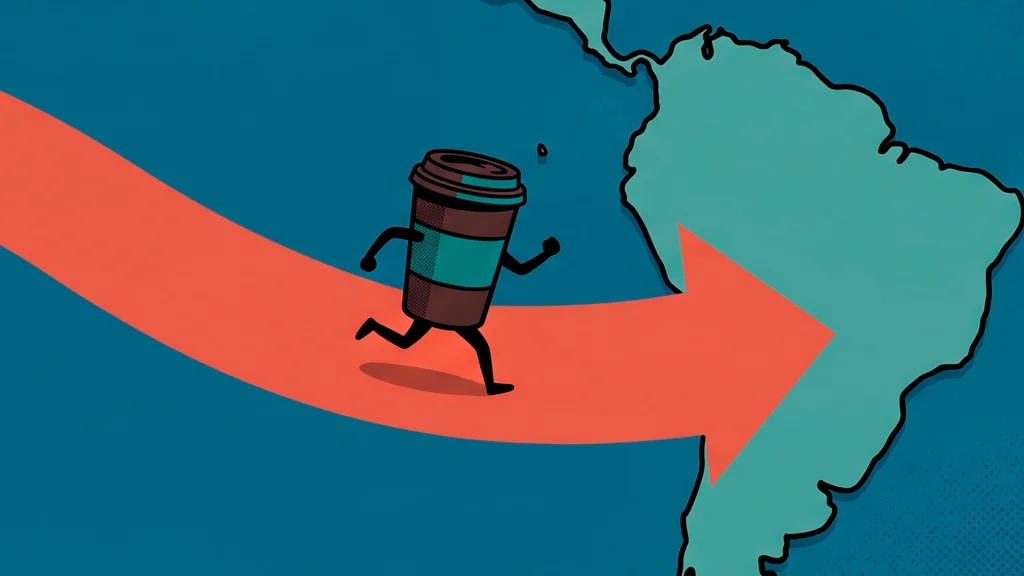
Luckin’s plans to buy about 120,000 metric tons of coffee beans from Brazil from 2024 to 2025 seems to confirm this strategy. In 2022, the brand already signed a three-year agreement to buy about 45,000 tons of coffee beans from Brazil.
Similarly, Cotti Coffee, founded by former Luckin executives, has rapidly expanded, opening thousands of stores across China and recently venturing into international markets, including Australia and the U.S.
These developments signify a broader trend: Chinese coffee brands are not only capturing domestic market share but are also challenging global coffee giants on the international stage.

Strategic shifts and the future of U.S. coffee brands in China
China’s ascent in global soft power rankings, now second only to the U.S., reflects its growing influence in shaping global consumer trends and cultural narratives.
The country’s emphasis on culture and heritage, along with its advancements in education, science, and sustainability, contribute to its enhanced soft power.
China ranks 7th globally in the Culture and Heritage pillar, excelling in arts, food, and heritage. It has also maintained its position at 9th for ‘influential in arts and entertainment’ and 8th for ‘food the world loves’ for two consecutive years, demonstrating its strong cultural presence.
“China’s growing global influence didn’t happen overnight,” says MJ. “According to local media, China’s expanding footprint across technology, media, and design has fueled a wave of cultural exports that go far beyond traditional manufacturing.”
“U.S. brands that respect Chinese cultural narratives, collaborate with local partners, align with youth identity aspirations, and engage authentically will still find opportunities for success – even in an increasingly competitive landscape.”
In response, Starbucks and other U.S. coffee brands are reevaluating their strategies in China, understanding the importance of not only competing on product quality but also engaging with the cultural sentiments of Chinese consumers.
Recognising the need to adapt, Starbucks is focusing on localisation efforts, introducing products tailored to Chinese tastes and expanding into lower-tier cities. However, the brand must navigate a complex landscape marked by a preference for domestic brands.
According to experts in-country, focusing on the coffee shop experience is important, but it must be context-sensitive and keep up with what local brands like Luckin and Cotti are doing. Starbucks risks falling behind if it continues to rely on its traditional “third place” concept. To succeed in the distinctive Chinese market, the company must adopt tailored strategies – taking cues from brands like Luckin Coffee by accelerating digital transformation, optimising store layouts, and introducing products that better suit Chinese consumer preferences.
Without such adjustments, Starbucks could see its market share decline even further.
“Ultimately, Chinese consumers value sincerity and meaningful connection over hype,” says MJ. “Any brand, whether Chinese or American, that delivers genuine lifestyle value and resonates with real consumer needs will have the best chance of building lasting success.”
As trade tensions persist, U.S. coffee brands must balance their global ambitions with a nuanced understanding of China’s shifting consumer preferences. Success will depend on their ability to adapt to local preferences, build genuine connections with consumers, and navigate the complexities of international trade relations.
Coffee Intelligence
Want to read more articles like this? Sign up for our newsletter here.