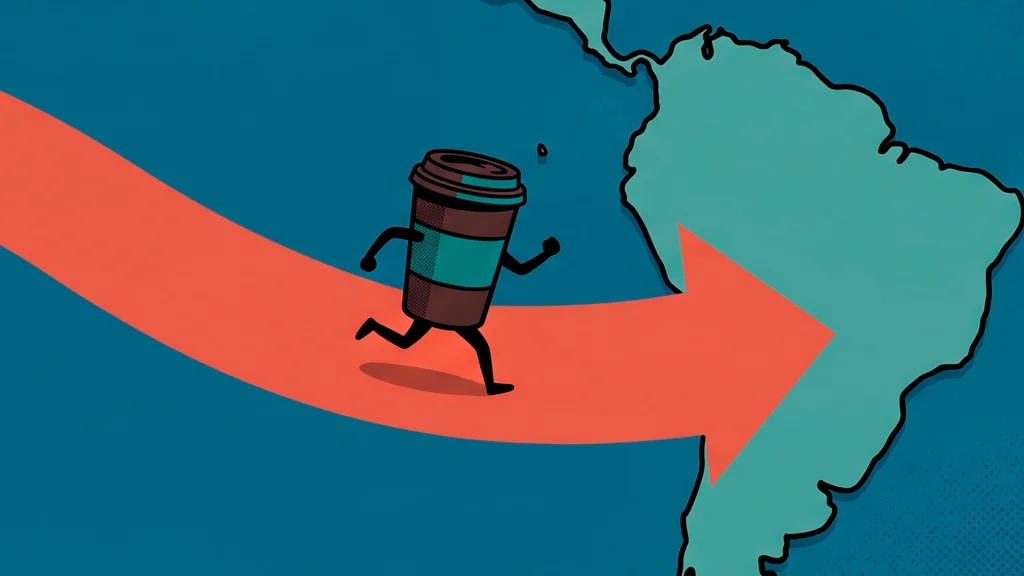
- A 10% blanket tariff – and potential increases – has prompted the US coffee sector to push for an exemption
- The US coffee industry supports 2.2 million jobs and contributes $343 billion to the economy
- Concerns over rising prices and disrupted supply chains are uniting the coffee community
THE U.S. coffee industry is grappling with the implications of newly imposed tariffs that threaten to disrupt the sector’s stability.
A 10% universal tariff on imported goods, including coffee, has been enacted, with potential higher rates for specific countries currently on pause – 46% on Vietnam and 32% on Indonesia, for example.
These measures have prompted industry stakeholders to advocate for exemptions, citing the potential for increased consumer prices and economic strain on small businesses.
Coffee Bros., a New York-based specialty roaster, has joined the National Coffee Association (NCA) in urging the federal government to exempt coffee from these tariffs. The NCA emphasises that coffee supports 2.2 million U.S. jobs and contributes $343 billion annually to the economy.
Given that 99% of coffee consumed in the U.S. is imported, the industry argues that tariffs on coffee are counterproductive and could lead to significant price increases for consumers.
The Specialty Coffee Association (SCA) has cautioned that the new tariffs could worsen existing price volatility, with negative repercussions for both producers and consumers. Meanwhile, members of the coffee community are urging leading coffee institutions to take an active stance by publicly advocating for the removal of the tariffs.
Many, including companies like Coffee Bros., are rallying behind the NCA as it takes the lead on formal advocacy efforts. But the call for tariff exemptions extends beyond the coffee sector. Several major U.S. food companies are also pushing for relief from the new import duties.
Notably, PepsiCo, Conagra, and J.M. Smucker – represented by the Consumer Brands Association – have urged the U.S. administration to exempt imports such as coffee, cocoa, and tropical fruits, which are not readily available from domestic sources. They argue that such exemptions are essential to protect manufacturers, support U.S. supply chains, and curb inflationary pressure on consumers.
Giovanni Quaratesi, Head of Corporate Global Affairs at Certified Origins, which specialises in importing extra virgin olive oil, sees clear parallels between the olive oil and coffee sectors.
“With over 97% of olive oil in U.S. supermarkets coming from abroad, the new tariffs pose a challenge for the whole sector,” he says. “The same logic applies to coffee. These are not optional luxuries. They’re daily staples with no viable domestic substitutes at scale.”
“If prices surge, businesses may be forced to reformulate their products or swap ingredients for cheaper, lower-quality alternatives. What’s at stake is not just price, but quality, health, and the integrity of the supply chain.”
This collective advocacy underscores the broader industry concern that the tariffs could significantly impact both producers and consumers, leading to higher prices, lower quality, and supply chain disruptions.
With coffee prices already at record highs due to climate-related supply issues in major producing countries, the additional financial burden from tariffs could be detrimental to the industry’s sustainability.
“We’re facing unprecedented cost increases with zero notice – there’s no way to plan for this,” says Alicia Love, President of Coffee Labs Roasters. “Growth will stall, and even if the tariffs are lifted, the uncertainty alone makes it nearly impossible to map out the year ahead.”
“Chaos like this kills momentum. A 10% tariff is significant – not just for small businesses, but for large ones too. Newer and smaller roasters could be forced to shut down. It will ripple into cafés as well, since roasters will have no choice but to pass costs on to consumers. Even farmers are worried for us – because they need us to survive in order to keep selling their beans.”
Grounds for advocacy
The coffee industry’s response to these tariffs is part of a broader pattern of advocacy by sectors reliant on imported goods not produced domestically.
The CBA, representing major food and beverage companies, has called for exemptions on tariffs for essential ingredients like coffee, cocoa, and tropical fruits. The CBA argues that such tariffs could lead to higher consumer prices and unintended harm to American manufacturers.
In 2021, the U.S. and EU agreed to suspend retaliatory tariffs for five years in a broader truce over aircraft subsidies, easing tensions that had impacted various sectors, including coffee. Though not coffee-specific, the move showed how coordinated advocacy and diplomacy can defuse trade conflicts – offering a hopeful precedent for today’s efforts.
In 2019, the U.S. administration threatened to impose retaliatory tariffs on European coffee imports during a broader trade dispute. The NCA mobilised industry stakeholders, generating over 13,000 public comments in opposition. The tariffs were ultimately avoided, demonstrating how unified industry advocacy can influence trade decisions.
However, the effectiveness of such advocacy depends on various factors, including political will and public sentiment. While some consumers may support protectionist trade policies, others express concern over rising prices for everyday goods.
The coffee industry hopes that highlighting the economic and cultural significance of coffee will bolster their case for exemption. However hopeful, not all remain convinced that even sector wide advocacy can achieve concrete change.
“I’m not very confident that the current advocacy will lead to a reversal,” says Alicia. “The NCA is making an effort, but it’s unclear who actually has influence or leverage in this situation.”
A similar dynamic is unfolding in the olive oil sector, where groups like the North American Olive Oil Association (NAOOA) are lobbying to protect access to healthy imports.
“American and European farmers and olive oil businesses members of the NAOOA have joined forces to ask for an exemption for olive oil, to make sure American families will still be able to access this healthy ingredient at a competitive price,” says Giovanni, a member of NAOOA.
This parallel highlights a sobering truth: Even the best-organised advocacy efforts may struggle against the backdrop of broader trade agendas. Still, for many in the coffee and food sectors, coordinated advocacy remains the only viable path forward.

What’s next?
If the tariffs remain in place, the ramifications for the coffee industry could be significant.
Increased costs may lead to higher prices for consumers, potentially reducing demand. Small businesses may struggle to stay afloat, and supply chain disruptions could become more pronounced.
Moreover, the tariffs could strain relationships with key trading partners, leading to broader economic implications.
“The more stable, established businesses might survive – but others will close, and some will have to downsize,” says Alicia. “That has real consequences for farmers.”
“If I have to reduce my purchases, a farmer I’ve worked with for 11 years could suddenly lose a whole container’s worth of sales. He relies on that relationship as much as I do. If tariffs drive prices even higher, fewer people may want to buy specialty coffee, pushing them toward cheaper, commercial alternatives instead.”
Giovanni highlights a similar risk for the olive oil sector.
“If these tariffs stay, some U.S. importers and international producers may have to re-think their strategies and investments,” he says. “In sectors like olive oil, where only 50% of U.S. consumers currently buy the product, added costs could slow growth in a market with huge potential.”
However, the industry’s proactive stance offers a glimmer of hope. By advocating for exemptions and highlighting the unique challenges faced by the coffee sector, stakeholders aim to mitigate the impact of these trade policies.
The situation underscores the importance of strategic advocacy and the need for policies that consider the complexities of global supply chains.
As the debate continues, the coffee industry remains at the forefront of discussions on trade, economics, and consumer impact. Whether these efforts will lead to policy adjustments or become a case study in the challenges of globalisation remains to be seen.
Coffee Intelligence
Want to read more articles like this? Sign up for our newsletter here.