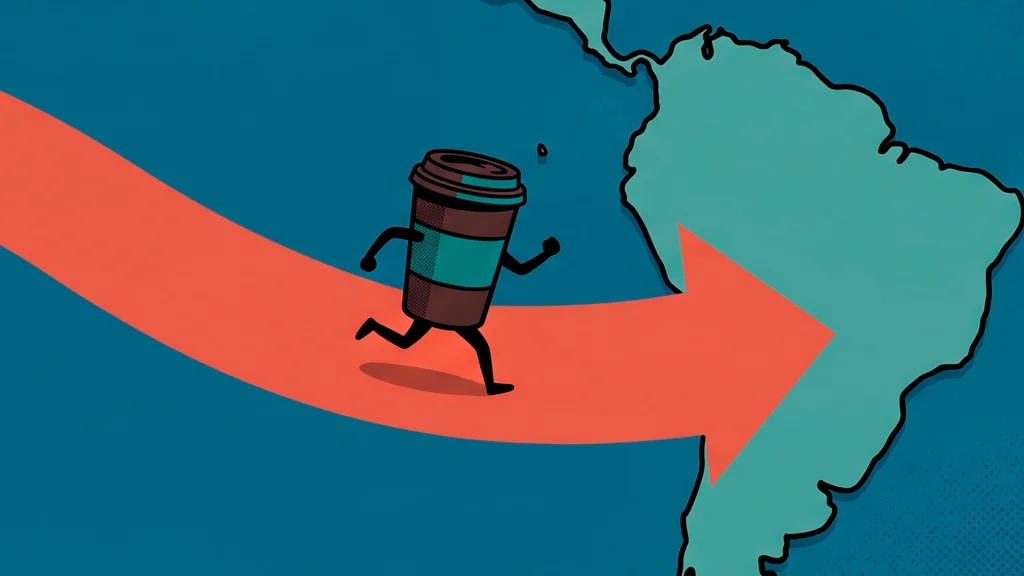
- Major roasters have tried – and failed – to become coffee farmers
- Green coffee export value accounts for less than 10% of the US$250 billion of revenues generated in coffee retail
- Soaring costs, climate risks, and cultural gaps make coffee farming a losing bet for new entrants
IN recent years, a growing number of coffee roasters – ranging from small artisanal operations to multinational corporations – have ventured into owning coffee farms.
The allure is understandable: controlling production from bean to cup, ensuring ethical sourcing, and differentiating their brand with exclusive farm-direct offerings.
The idea of a roastery operating its own farm conjures an image of a harmonious, vertically integrated business that delivers superior quality and sustainability while bypassing middlemen. The reality, however, is far more complicated.
Consider Press Coffee, a respected specialty coffee brand in the U.S., which announced its acquisition of a coffee farm in Panama in 2024, promising “unique flavours” for its Phoenix customers. Their goal mirrors the aspirations of many in the industry: securing exclusive supply chains, marketing single-origin transparency, and embedding sustainability into their business model.
“I think what motivates coffee roasters to buy farms is because they want to be so involved in something that they love,” says Nico Herr, Chief Operations Officer at Mountain Harvest Coffee.
“But I think that to love something well, you have to know it well and know what you hurt and what you don’t hurt. There’s a lot of conversation about what green coffee identity is. I think ultimately those who are literally tied to the soil should be answering that. Because coffee is also culture.”
At trade events like the Producer & Roaster Forum (PRF), this topic frequently arises, as more coffee companies explore the possibility of farm ownership.
Even large players have embraced this trend. Starbucks has operated its Hacienda Alsacia farm in Costa Rica since 2013, touting it as a research and development hub. In Colombia, Green Coffee Company (GCC), which is based in the US, owns 14 coffee farms and claims to be the “world’s largest arabica producer.” Although its mission is to help rejuvenate ailing plots, it has also been accused of removing diversity in place of a homogenous, albeit well-functioning, portfolio of farms.
“In a bid to consolidate and streamline production geared toward improving productivity and hence driving up profits, some coffee roasters are buying coffee farms in producing regions,” says Denis Twinamatsiko, Founder and CEO of Now Africa Initiative.
“However, as a farmer, I am critical of this because land ownership is our lifeline as producers. When farmers are pushed off land by big money spenders, the end result hasn’t been good and we have witnessed this in both agricultural projects as well as big infrastructure projects where people are ejected from their land. They end up being stranded even after the so-called ‘full compensation.’ Our land is our heritage!”
On paper, the benefits appear undeniable: exclusive control, improved margins, and deeper brand storytelling that avoids dubious “farm washing” marketing practices.
Yet, despite these theoretical advantages, coffee farming remains a perilous venture – one that coffee roasters, no matter their size, may be better off avoiding, both for risk and heritage reasons.
The harsh realities of coffee farming
Coffee farming is one of the most demanding and risk-laden agricultural pursuits. Unlike roasting and retailing, which are relatively high-margin activities, coffee cultivation is capital-intensive, laborious, and fraught with uncertainties.
Farmers must contend with climate change, pests, volatile commodity prices, and shifting consumer trends – all while ensuring soil health and maintaining sustainable farming practices.
Global coffee prices are notoriously volatile.They have surged to their highest levels since April 1977, at $3.88 currently, driven by fears over supply disruptions in top-producing nations like Brazil and Vietnam, the anticipation of the EU Deforestation Directive (EUDR), and tariff threats coming out of the new Trump administration in the U.S.
It is estimated that currently the average green coffee export value accounts for less than 10% of the US$200 to US$250 billion of revenues generated in the coffee retail market.
Meanwhile, climate change is forcing coffee-growing regions to higher elevations, with research and climate simulations estimating that by 2050, the total land suitable for coffee production could shrink by 50%.
Organic and regenerative coffee farming, often touted as the future of sustainable coffee, is particularly arduous. Soil health must be meticulously managed, and pests must be controlled without synthetic pesticides.
The financial and logistical burden of obtaining organic certification can be overwhelming, especially for new entrants unfamiliar with the intricacies of agricultural compliance. Murray Cooper of Firefly is a well-known example of a non-native coffee farmer trying and failing in Ecuador because of cash shortages and other realities on the ground.
“I’ve been asked about possibly owning farms in Uganda and elsewhere, but it’s not appropriate,” says Nico. “It’s not my heritage, and I could never match the deep understanding of those who have lived and worked the land for generations. In Uganda, coffee farms are often inherited, passed down through families – it’s not my place to take ownership of that legacy.”
Many coffee farmers inherit their land and, having grown up in the business, develop the generational knowledge required to navigate the complexities of production. Roasters, on the other hand, are often stepping in blind, underestimating the cost and effort needed to sustain an operational farm.
Simply put, farming is not a business for the uninitiated – or at least, it makes it difficult. Without culture or heritage, acquiring and operating a farm becomes even more complicated and risks hurting coffee-growing communities.
“Recently, a major player in coffee admitted failure after trying to run a farm the ‘right’ way,” says Nico.
“He learned the hard way that farming isn’t just about technique – it’s about cultural and generational knowledge, much of which is unspoken. When you’re tied to the land, indigenous practices shape everything, and if you’re an outsider, truly understanding them takes a lifetime.”
A roaster buying a farm might assume they can improve productivity, but without expertise in agronomy, infrastructure, and supply chain logistics, they are likely to face major inefficiencies. The result is often the realisation that outsourcing production to experienced, independent farmers remains the smarter choice.

Where are the results?
Time and again, roasters make headlines with the announcement that they have acquired a farm, but rarely do we see follow-up reports detailing sustained success.
Where is the news of increased productivity, expanded employment, or enhanced land management? Often, these stories are conspicuously absent, and for good reason: many such ventures fail to deliver meaningful financial or operational benefits.
“Are there any real success stories of a roaster buying land and thriving?” asks Nico. “The bigger question is: what are we valuing?”
“Success isn’t just about profitability – most farms rely on government subsidies anyway. Maybe the real lesson is understanding one’s place in the supply chain. A farm can be productive, but at what cost?”
In reality, the operational complexities of running a farm frequently overshadow the anticipated advantages.
Coffee roasters who venture into farming often find themselves bogged down by the realities of land management, rising labour costs, and the unpredictable nature of agricultural yields. New entrants into coffee farming often underestimate costs, largely due to unforeseen challenges such as soil degradation, labour shortages, and logistics inefficiencies.
Scaling a farm is an entirely different challenge from scaling a roastery – one that requires not just capital, but deep expertise, patience, and an ability to navigate the agricultural bureaucracy of coffee-producing countries.
For every Press Coffee or Starbucks that makes headlines with a farm acquisition, there are countless untold stories of roasters struggling with their newfound agricultural investments. Without a clear and sustained strategy, these farms often become costly, unmanageable liabilities rather than profitable assets.
“I often see multinationals enter Uganda’s specialty coffee scene with cheaper financing and high-quality ambitions,” says Nico. “Yet, instead of investing in local talent, they hire other multinationals or immigrants from familiar cultures (often Indians in Uganda).”
“When we exclude local voices from modern coffee practices, we miss the chance for real innovation – the kind that could transform not just a farm, but the entire industry.”
Rather than buying farms, coffee roasters would be better served by strengthening their relationships with independent producers. By supporting farmers through fair pricing and long-term purchasing commitments, for example, roasters can secure quality supply chains without assuming the immense risks of farm ownership.
The best coffee farmers are those who have inherited generational knowledge and have spent decades refining their craft. Roasters should recognise that their expertise lies in roasting, branding, and distribution – not in the backbreaking work of managing a coffee farm – however small.
Ultimately, the romantic notion of farm ownership must be tempered with economic reality. Buying a coffee farm may sound like an attractive business move, but for most roasters, it is an expensive and unnecessary gamble – one that rarely pays off in the long run and runs the risk of harming a longstanding ecosystem of established farmers in the region.
Coffee Intelligence
Want to read more articles like this? Sign up for our newsletter here.