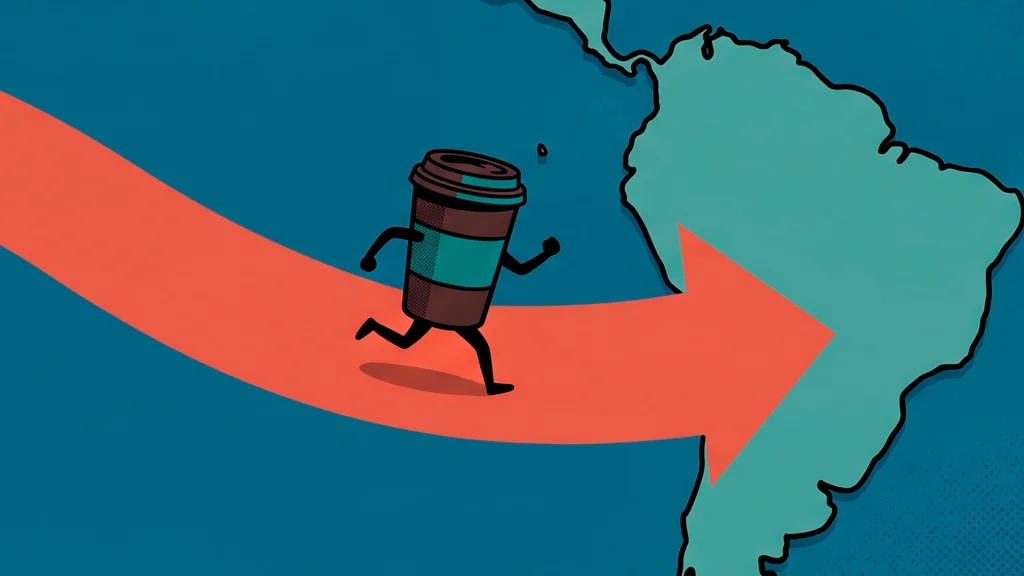
- Taco Bell’s Live Más Café will see the brand target younger coffee consumers
- Fast-food chains added 1,400 coffee outlets in 2023
- Taco Bell is joining the race to compete with Starbucks and Dunkin’
Taco Bell, a brand synonymous with budget-friendly tacos and late-night cravings, is expanding into premium coffee.
The chain, owned by Yum! Brands, is testing a premium beverage concept called Live Más Café. Partnering with its franchisee Diversified Restaurant Group, Taco Bell has launched this experiment in San Diego, featuring a lineup of Chillers, Agua Frescas, and coffees, served alongside its classic food items.
This shift marks an ambitious play to attract coffee drinkers and diversify its consumer base.
Taco Bell stands out as the top performer within Yum! Brands’ portfolio, consistently surpassing its sister brands, KFC and Pizza Hut. In Yum’s latest earnings quarter, the chain reported a 4% rise in same-store sales, driven by the success of popular menu offerings such as the new value meal and the Big Cheez-It.
Live Más Café is more than just a rebranding exercise. The concept represents Taco Bell’s response to a rapidly evolving fast-food landscape. The café introduces “Bellristas,” Taco Bell’s version of baristas, and an inviting ambiance that contrasts with the traditional quick-service environment.
The menu includes specialty drinks, with an emphasis on Latin American-inspired options like Agua Frescas, signalling a clear nod to its core identity.
But why coffee, and why now? For one, coffee is a high-margin product and has proven to be a reliable draw for repeat customers.
Chains like McDonald’s have capitalised on this with their McCafé concept, successfully competing with Starbucks by offering affordable specialty coffee drinks. Taco Bell seems to be taking this strategy one step further, blending it with its unique Latin-inspired brand DNA.
It’s also targeting the same 18-34 young age segment it has historically catered to.
“What is clear is dispensed beverages are profitable, and the younger generation is infatuated with adjectives such as ‘handcrafted’ and ‘elixirs’ and other unique beverage concoctions with catchy names,” says Tim Powell, Principal of Foodservice IP Chicago, Management Consultancy.
“This generation doesn’t drink alcohol like previous ones. Starbucks has grabbed the tweens and 18-24 year-olds with its cold beverages that are $5-$6 on average with gross margins of 90-95 percent. Live Más wants some of this pie.”
The appeal of coffee also broadens Taco Bell’s reach into morning and midday markets, times when its sales have historically been weaker compared to lunch and late-night hours.
Interestingly, the involvement of the Karali Group – one of Taco Bell’s largest UK-based franchisees – has raised questions. Known for innovating within the Taco Bell framework, the Karali Group spearheaded the rollout of breakfast menus in international markets.
While Karali’s direct involvement with Live Más Café hasn’t been confirmed, its influence could well have inspired this push to elevate Taco Bell’s beverage game.
Diversified Restaurant Group’s participation in the pilot phase further underscores Taco Bell’s reliance on franchisee innovation to adapt to shifting consumer preferences.
Taco Bell’s playbook for consumer expansion
Taco Bell is no stranger to reinvention. Throughout its history, the chain has repeatedly adjusted its strategies to appeal to different consumer segments.
In the 1980s, 1990s, and early 2000s, Taco Bell aggressively targeted younger, cost-conscious consumers with its “Think Outside the Bun” campaign – before switching to “Live Más” in 2012 – a slogan that emphasised its distinct positioning in a burger-dominated fast-food market.
The chain’s menu innovation during this time, including products like the Doritos Locos Tacos, exemplified its knack for delivering novelty and value.
Notably, beverages have played a supporting role in Taco Bell’s campaigns, though the chain has historically been slow to capitalise on the coffee trend.
Limited-edition freezes and soda tie-ins, such as its exclusive partnership with Mountain Dew’s Baja Blast, have long been staples of its menu.
However, coffee offerings have been sparse, largely limited to basic drip options. Live Más Café marks a dramatic pivot, positioning coffee and specialty drinks as core components of its strategy to lure new audiences, including professionals, students, and families who may not have considered Taco Bell as a coffee destination.
Gen Z remains a core target market for Taco Bell, which employs demographic segmentation, analysing factors such as age, gender, income, and location to identify key target segments.
“In our opinion, there are two separate segments here,” says Tim. “Think about concepts that have three brands under the same roof to meet breakfast, lunch and snacking.”
“I think Taco Bell hopes to attract women with the specialty drinks, but our research shows that the brand of Starbucks (carrying the cup, etc.) goes farther than just quality and price for women in the 16-24 age group.
As for premium coffee, itself, I don’t think Live Más can realistically steal share from say a Dutch Brothers, Peet’s or Starbucks with large success. I think the value is in the cold beverages.”
This evolution also signals Taco Bell’s intent to compete in the lifestyle space. By offering specialty beverages, Taco Bell aims to capture the same aspirational appeal that draws customers to brands like Starbucks and Dunkin’ – whether it can successfully do so is another story.

An industry shake-up?
Live Más Café’s emergence is part of a broader trend of fast-food chains encroaching on coffee’s territory – and with reason. Coffee and specialty beverages are doing better than ever.
Data shows that the approximately 20 coffee chains included in the firm’s Top 500 for 2023 collectively added nearly 1,400 locations last year, surpassing growth in every other menu category.
The rapid expansion isn’t limited to coffee chains – beverage concepts like Swig and Smoothie King also had a strong 2023, with their momentum carrying into 2024.
McDonald’s has already demonstrated the profitability of specialty coffee through McCafé, while Burger King, Wendy’s, and even Chick-fil-A have expanded their breakfast and beverage options in recent years.
Taco Bell’s foray into coffee suggests that the market remains ripe for innovation, particularly at the intersection of convenience, affordability, and specialty.
“The Live Más Café initiative signals a larger trend of fast-food brands entering the premium coffee space. KFC just announced its latest beverage-centered brand, for example,” says Tim.
For dedicated coffee chains like Starbucks, the rise of fast-food competitors entering the specialty coffee space could potentially pose a challenge.
While Starbucks maintains its edge through premium branding, personalised service, and an expansive product range, the affordability and ubiquity of fast-food options may sway cost-conscious consumers.
Dunkin’, which bridges the gap between coffee and fast food, will also feel the heat as brands like Taco Bell undercut its prices while offering an equally trendy product lineup.
However, Taco Bell’s success in this space is far from guaranteed. Starbucks has cultivated an image of exclusivity and quality that few fast-food brands can rival.
Even McCafé, despite its success, has not fundamentally altered Starbucks’ dominance. Taco Bell must ensure that Live Más Café offers a unique value proposition – leveraging its Latin-inspired heritage and competitive pricing – to stand out in a crowded market.
There are also operational challenges to consider. Launching specialty drinks requires a logistical overhaul, from staff training to equipment upgrades, which could strain franchisees already navigating labor shortages and rising costs.
Yet if Taco Bell can execute this transition smoothly, Live Más Café could serve as a blueprint for fast-food chains seeking to diversify their offerings.
Beyond coffee, Taco Bell’s beverage innovation reflects a growing emphasis on customisation and experiential dining within the fast-food sector. As consumers increasingly demand personalised experiences, chains must adapt to meet these expectations.
The introduction of “Bellristas” and the café concept aligns with this shift, offering a more sophisticated and interactive customer journey.
By tapping into the lucrative coffee market, Taco Bell is positioning itself as a lifestyle brand capable of competing with both fast-food giants and coffee specialists.
The café experiment underscores a broader industry trend, with fast-food chains increasingly blurring the lines between dining categories. As coffee becomes a battleground for innovation, Taco Bell’s success – or failure – will offer valuable lessons for the future of the fast-food industry.
Whether Live Más Café becomes a nationwide staple or remains a niche experiment, one thing is clear: the competition for the morning coffee crowd is heating up, and Taco Bell is determined to get its share.
Coffee Intelligence
Want to read more articles like this? Sign up for our newsletter here.