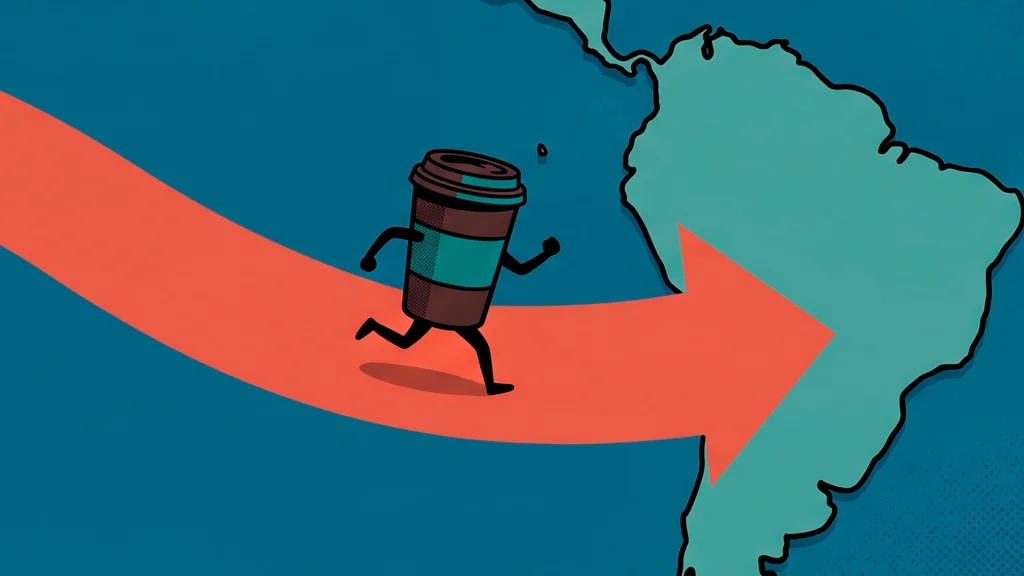
- More than a product, coffee is also heavily politicised tool for economic development
- USAID’s Coffee Alliance for Excellence (CAFE) will leverage $14 million over its 7-year partnership
- Are foreign donors and governments helping farmers, pushing their own agendas, or both?
FOR some, coffee is just a pumpkin spice latte (it is the season, after all) – but for others, it is deeply politicised.
Coffee is often used as a tool for economic development, political influence, and social change, shaped by the interests of governments, international aid, and global trade systems. These dynamics can have significant political consequences for farmers in producing countries.
Coffee production in developing countries is heavily shaped by international bodies like USAID and the World Bank, for example, which provide funding and technical support to boost production, quality, and market access for farmers.
USAID’s Farmer-to-Farmer (F2F) programme, active in 11 countries, connects US volunteers with local farmers to boost yields and promote sustainable practices. By the end of 2024, its Coffee Alliance for Excellence (CAFE) programme in Peru will have leveraged $14 million, plus private sector backing, to support smallholder coffee farmers.
Other initiatives like NKG BLOOM and other large-scale development projects are often funded to meet these goals. But the question remains – what is the underlying motivation behind these investments?
Karl Wienhold, Researcher at the University of Lisbon and author of ‘Cheap Coffee: Behind the Curtain of the Global Coffee Trade,’ points out that international aid is rarely a purely altruistic effort, and that some of these programmes come with a clear agenda.
“USAID’s coffee programme explicitly states that one of its purposes is to ‘mitigate some of the root causes driving migration’ by promoting expanded coffee production, as well as to ‘ensure a steady supply of quality coffee to the United States,’” he says.
Partnering with the U.S. Department of Defense, these programmes seem tied to a broader national security strategy. Yet, Karl argues they often serve self-interests, even if they align with coffee-growing communities’ visions of prosperity.
Trade agreements and certifications like Fairtrade significantly shape coffee production and sales. While Fairtrade aims to improve conditions and sustainability, its real impact is debated, with critics arguing it merely redistributes wealth to help farmers survive, without tackling the root causes of their challenges.
Private companies’ corporate social responsibility (CSR) programmes often follow a similar pattern, treating the symptoms but not the cause and potentially reinforcing systemic dependence.
“Many programmes great for PR do little to change the root causes of farmer marginalisation,” says Karl. “They redistribute just enough wealth to keep farmers afloat, ensuring supply, while controlling their actions and fostering gratitude.”
The transfer of wealth and resources from the global South to North, rooted in colonialism, continues with coffee. This paternalistic dynamic allows coffee to be exploited as a tool to sustain and amplify that imbalance.
“We must ask why downstream actors in the North are always in a position to ‘give back,’ while those upstream constantly need handouts just to keep supplying the raw material that creates downstream wealth,” says Karl.
Coffee as a political tool
The politicisation of coffee extends beyond economics. Governments and international bodies view it as key to rural development and trade, integrating it into national branding. It’s also a symbol of cultural heritage and national pride for many countries.
For nations like Colombia, Ethiopia, and Brazil, coffee serves as a soft power tool on the global stage. However, this can cost sovereignty, as countries trade control over resources for loans and aid.
Lender or donor countries sometimes leverage this soft power by offering aid and lending contingent upon liberalisation that offers them and their companies access to the funding recipient country’s resources.
“There’s a direct link between multilateral lending, foreign aid, and trade liberalisation, enabling transnational corporations to extract wealth from global South countries that sacrificed sovereignty for loans,” says Karl. “This affects all sectors, especially raw materials like coffee.”
Coffee’s significance often extends into areas like national identity, sovereignty, and international diplomacy. For coffee-producing countries, promoting coffee is not only about boosting export revenue – it’s about crafting a narrative that asserts their place in the global economy.
Karl highlights that international aid began with Europe’s post-war reconstruction and evolved into a Cold War tool to steer former colonies away from socialism – with coffee becoming part of this geopolitical strategy. Today’s coffee projects stem from that legacy, and as Karl notes, are rarely selfless.
“Post-cold-war international aid or lending, often contingent upon economic liberalisation, have coincided with the rise in dominance of transnational firms and financial capital,” he says. “Aid agencies and their strategies vary, but have often followed ethnocentric ‘development’ ideas and served broader agendas.”
Coffee’s role in international diplomacy is evident in its place within global sustainability narratives. As demand for ethically sourced products grows, governments and corporations position their coffee sectors as sustainability leaders.
However, critics argue these initiatives often preserve the status quo rather than reform the coffee supply chain. Instead of tackling deeper issues, they offer superficial fixes.
“Adding a nice spin to business-as-usual without addressing its problems just shields it from scrutiny and regulation,” says Karl.

Support can sometimes have strings attached
International and government involvement in the coffee sector brings both benefits and drawbacks for producers. On one hand, development programmes offer farmers financial support, resources, and access to global markets, along with subsidies and infrastructure improvements that stabilise local economies.
On the other hand, these interventions often create dependencies, distort local markets, and focus on short-term gains, leaving farmers worse off in the long run.
“When coffee is the main source of foreign exchange, there’s pressure to boost exports in ways that harm farmer wellbeing,” says Karl. “This can lead to land consolidation, displacement, and production systems that make farmers vulnerable to shocks.”
A key issue is the power imbalance between smallholder farmers and large organisations, including international donors and Fairtrade bodies. While Fairtrade aims to support farmers, it is sometimes seen as controlling rather than empowering. Conditional support, like forcing new production methods, can erode cultural ties and cause lasting harm.
“When resources are accepted out of necessity, they can alter behaviour, weakening community bonds and creating long-term issues,” Karl adds.
The politicisation of coffee raises critical questions: are foreign donors and governments truly helping farmers, advancing their own agendas, or both?
While aid and government programmes offer short-term gains, they rarely tackle the root causes of poverty and inequality. For coffee producers, navigating this complex landscape is a tough challenge, especially when larger industry players hold the power.
Coffee Intelligence
Want to read more articles like this? Sign up for our newsletter here.